

Why Dashboards Crack in the Summer (and How to Prevent It)
March 28, 2026
Why Dashboards Crack in the Summer (and How to Prevent It)
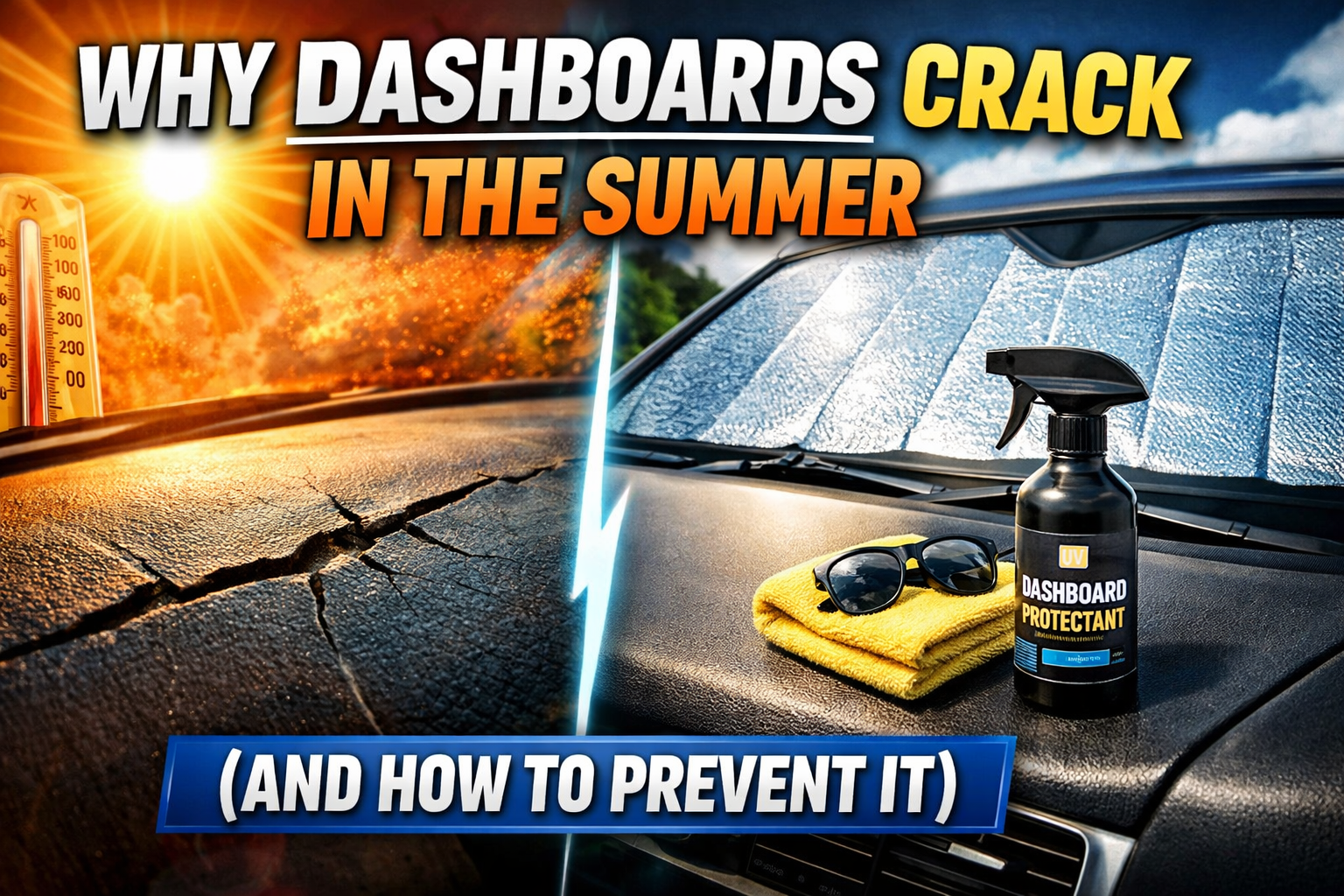
The Summer Dashboard Problem Most Drivers Ignore
Step into your car on a blazing Chicago afternoon and the heat hits you like a wall. The steering wheel is hot. The seats feel like they have been sitting in an oven. And right in front of you, the dashboard that once looked smooth and rich now shows something unsettling. Fading near the windshield. A dull chalky patch. Maybe even the first thin crack spreading across the surface.
Most drivers assume this kind of damage simply comes with age. In reality the real culprit is summer itself. Months of intense sunlight and rising interior temperatures quietly attack the materials that make up your dashboard. Day after day ultraviolet radiation and extreme heat weaken the plastics and vinyl that protect the structure underneath.
Over time those materials lose flexibility and strength. The combination of heat ultraviolet exposure and repeated expansion and contraction slowly turns once durable surfaces into brittle ones. Eventually the material gives up and splits.
The good news is that this process is not inevitable. With the right protection, consistent care and proper interior maintenance the damage can be slowed dramatically and in many cases prevented. That is why professional interior care matters. Shops that specialize in protecting vehicle interiors such as Chicago Auto Pros spend a great deal of time focusing on preventative treatments that help dashboards stay flexible, clean and protected from the harshest elements of summer.
What Your Dashboard Is Made Of And Why It Matters
At first glance a dashboard looks like a single solid piece of material. In reality it is built more like a layered structure designed for both strength and comfort.
Most modern dashboards contain three main components working together. The base layer is a rigid plastic structure that provides shape and support. Above that sits a foam cushioning layer which gives the dashboard its slightly soft feel and helps absorb vibrations. The final outer surface is typically made from vinyl PVC or polyurethane which creates the visible finish drivers see and touch every day.
This outer skin is the part most vulnerable to damage. Lower cost dashboards often rely on PVC based plastics which are affordable but tend to become brittle faster when exposed to heat and ultraviolet light. Higher quality interiors may use polyurethane or TPU materials which can last longer especially when they include ultraviolet stabilizers designed to resist sunlight.
When the protective outer layer begins to fail the changes appear slowly at first. The rich color begins to fade. The surface loses its natural finish and becomes dull. In many cases the material develops a dry chalky appearance near the windshield where sunlight hits hardest. Eventually that weakened surface begins to crack and those cracks can spread across the dashboard over time.
Understanding how these materials are constructed makes it much easier to see why summer heat and sunlight can be so destructive.
Why Summer Destroys Dashboards
Summer conditions create the perfect environment for dashboard damage. Heat ultraviolet radiation and repeated temperature changes combine to slowly weaken the plastics and vinyl used in modern vehicle interiors.
Intense Ultraviolet Exposure
The largest contributor to dashboard damage is ultraviolet radiation from sunlight. Ultraviolet light breaks chemical bonds inside plastics and vinyl through a process known as photodegradation.
As these bonds weaken the material begins to lose its strength and flexibility. The first signs are cosmetic changes such as color fading or a loss of surface gloss. Over time the plastic becomes more brittle which allows small fractures to form. Eventually those fractures turn into visible cracks across the dashboard.
This process affects many of the plastics used in modern interiors including PVC polypropylene ABS and TPU.
Extreme Interior Temperatures
Sunlight does more than deliver ultraviolet radiation. It also heats the interior of a parked vehicle to extreme levels.
Even on moderately warm days the interior temperature of a parked car can climb well above one hundred degrees within a short period of time. The dashboard itself absorbs the most direct sunlight and can reach temperatures between one hundred fifty and two hundred degrees when exposed to direct sun through the windshield.
At these temperatures the polymers inside plastics and vinyl begin to break down much faster which accelerates any existing damage.
Thermal Cycling
Summer weather also introduces another hidden stress on dashboard materials. Each day brings a cycle of intense heat followed by cooler evening temperatures.
As the dashboard heats up the materials expand slightly. When temperatures drop at night the materials contract again. This repeated expansion and contraction places constant stress on the structure of the material.
Over weeks, months and years this fatigue eventually creates tiny fractures within the surface which develop into visible cracks.
Loss of Oils and Moisture
Another consequence of prolonged sun exposure is the gradual loss of plasticizers and moisture within the dashboard material.
Plasticizers help keep vinyl and plastic surfaces flexible. As heat and ultraviolet radiation pull these compounds out of the material the surface begins to dry out. Drivers often notice this stage when the dashboard looks dull, dusty or powdery.
Once the surface becomes dry and brittle it becomes far more likely to crack under normal vibration and temperature shifts.
Material Quality and Vehicle Age
Not all dashboards age the same way. Vehicles built with lower cost PVC materials tend to lose strength faster when exposed to ultraviolet light and heat.
Over time these materials reach a point where brittleness becomes unavoidable. Older vehicles, especially those that spend years parked outdoors, often reach this stage sooner which explains why dashboard cracking is more common in aging interiors.
Early Warning Signs Before Your Dashboard Cracks
Dashboard cracking rarely happens overnight. In most cases the material shows several warning signs long before a visible split appears. Recognizing these early changes can give drivers a chance to protect the surface before the damage becomes permanent.
One of the first indicators is fading or uneven discoloration across the dashboard surface. Areas closest to the windshield often lose their rich color first because they receive the most direct sunlight.
Another common sign is a dry or chalky surface texture. Instead of looking smooth and healthy the material may appear dull or dusty even after cleaning.
This usually means the dashboard is losing the oils and plasticizers that keep it flexible.
Drivers may also notice that the dashboard feels stiff or brittle when touched near the windshield. Healthy interior materials should feel slightly flexible. When they begin to harden it often means the material is weakening.
Surface dullness and a loss of gloss are also early indicators that ultraviolet exposure is beginning to degrade the dashboard finish.
Once cracks appear the situation changes dramatically. Permanent repairs become difficult and most solutions are cosmetic rather than structural. Drivers are often left choosing between dash caps, decorative covers or a full dashboard replacement.
Because of this prevention becomes far more affordable and practical than repairing severe damage later.
How To Prevent Your Dashboard From Cracking
Preventing dashboard damage comes down to reducing sunlight exposure, controlling interior temperatures and maintaining the material properly. Small habits and protective measures can significantly slow the damage that heat and ultraviolet radiation cause during the summer months.
Block the Sun
The most effective way to protect a dashboard is to limit the amount of direct sunlight that reaches it.
A reflective windshield sunshade is one of the simplest tools available. When placed inside the windshield it reflects sunlight away from the dashboard and reduces the amount of heat trapped inside the vehicle. Lower interior temperatures mean less stress on dashboard materials.
Parking in shade whenever possible also makes a major difference. Garages, carports and even shaded parking under trees can dramatically reduce ultraviolet exposure over the life of a vehicle.
For vehicles that spend long periods parked outdoors a breathable car cover can add another layer of protection. By shielding the windshield and interior from sunlight it helps prevent heat buildup and ultraviolet damage to the dashboard surface.
Add Ultraviolet and Heat Protection
Another effective strategy is adding protective layers that reduce the amount of ultraviolet radiation entering the vehicle.
Quality window tint can block a large portion of incoming ultraviolet light while also reducing solar heat. By lowering interior temperatures and limiting ultraviolet exposure window tint helps slow the fading and deterioration that lead to dashboard cracking.
Ultraviolet protectant dashboard conditioners can also help maintain the flexibility of interior materials. These products create a protective barrier that reduces sun damage while helping the material retain its natural softness. Regular application is important especially during the summer months when sunlight exposure is strongest.
Some vehicle manufacturers also incorporate ultraviolet stabilizers into the materials used for dashboards. These additives improve resistance to fading and cracking in regions where intense sunlight is common.
Control Interior Temperatures
Managing interior heat is another key part of protecting dashboard materials.
When safe to do so, leaving the windows cracked slightly can allow trapped hot air to escape from the vehicle. Even a small amount of airflow can reduce peak interior temperatures.
Using the vehicle climate system strategically can also help. When entering a hot vehicle it is often best to begin with fresh air and high fan speed to push hot air out of the cabin. After the temperature drops the system can switch to recirculation to cool the interior more efficiently.
Drivers should also avoid directing extremely cold air onto a dashboard that has been sitting in intense heat. Rapid temperature changes can add stress to already heated materials.
Maintain the Dashboard Properly
Routine maintenance plays a major role in extending the life of dashboard materials.
Regular cleaning removes dust and contaminants that can degrade surfaces over time. Using interior safe cleaners designed for automotive plastics helps prevent chemical damage that can occur with harsh household products.
It is also important to avoid greasy dressings that leave heavy residues. Silicone rich products often attract dust and may not provide long term ultraviolet protection. A low gloss protectant designed specifically for dashboards is typically a better choice.
Drivers should also respond quickly to early signs of wear. If fading dryness or surface dullness begins to appear, applying protective treatments and reducing sun exposure can slow further damage before cracks form.
Why Prevention Is Cheaper Than Dashboard Replacement
Once a dashboard develops visible cracks, repair options become limited. Most solutions address the appearance rather than restoring the original material.
Many drivers install dash caps which cover the damaged area with a molded overlay. Others use cosmetic covers that hide cracks but do not repair the underlying material. In severe cases the only permanent solution is replacing the entire dashboard assembly.
Dashboard replacement is often expensive due to the labor involved in removing interior components and installing a new structure.
Compared with those costs, preventative care is far more affordable. Consistent interior maintenance, ultraviolet protection and proper temperature management can extend the life of dashboard materials for years.
For drivers who want to preserve the condition of their interior, professional interior detailing can also play a valuable role. Proper cleaning protective treatments and regular care help shield dashboards from the harsh conditions that cause cracking in the first place.
Protecting Your Dashboard Before Summer Damage Starts
Summer places enormous stress on vehicle interiors, and dashboards often take the brunt of that exposure. Day after day sunlight pours through the windshield while heat builds inside the cabin. Over time this combination slowly weakens the plastics and vinyl that make up the dashboard surface.
Cracking is rarely the first stage of damage. In most cases it is the final result of months or even years of ultraviolet exposure, extreme heat, and gradual material breakdown. By the time visible splits appear the dashboard has already gone through fading, drying, and structural weakening.
The encouraging part is that much of this damage can be slowed with a few consistent habits. Using windshield sunshades, reducing direct sunlight when parking, applying ultraviolet protectants, and maintaining the dashboard with safe interior products can dramatically extend the life of these materials.
Regular care also helps preserve the overall appearance and value of a vehicle interior. Professional interior detailing adds another layer of protection by properly cleaning surfaces and applying treatments designed to keep dashboard materials flexible and shielded from sunlight. With the right approach drivers can keep their dashboards looking healthy and intact long before summer damage ever has a chance to take hold.
Share with your friends

We Make Your Car Look Beautiful
Founded with an unquenchable desire for automotive perfection, Chicago Auto Pros is a leader in paint protection efforts and aesthetic vehicle detailing services in Chicago, Illinois. When you bring your automobile to our Chicago-based detailing shop, you are sure to experience unmatched integrity, customer service excellence, and above all, absolute automotive perfection from the inside out. Choose the right auto detailing team - choose Chicago Auto Pros!
Lombard Location
207a Eisenhower Lane South, Lombard, Illinois 60148, United States
Glenview Location
2075 Johns Ct, Glenview, IL, 60025, United States
St. Charles Location
315 Industrial Dr, St Charles, IL 60174, United States