

What To Do Immediately After Your Car Gets Caught in a Storm
April 9, 2026
What To Do Immediately After Your Car Gets Caught in a Storm
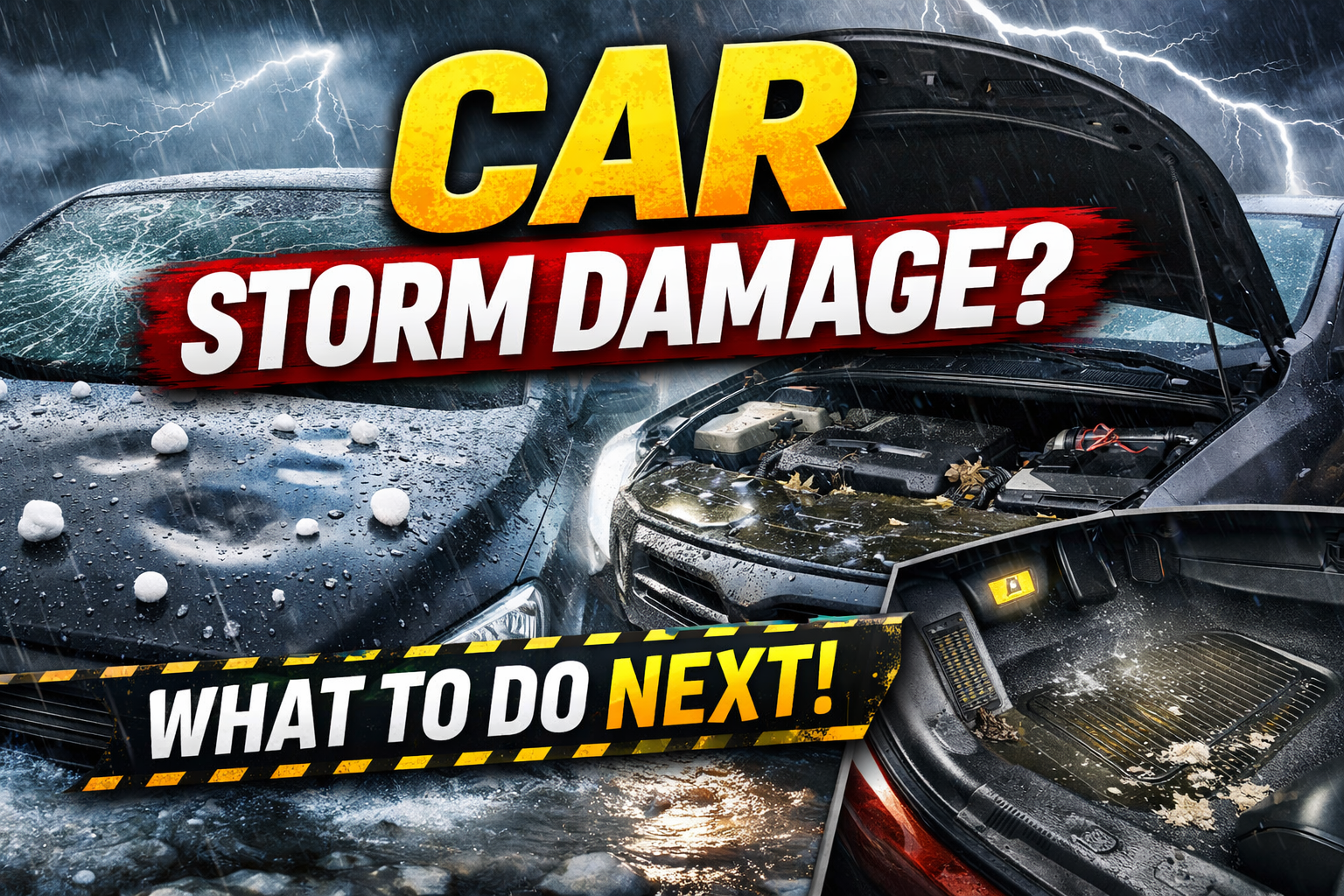
The Calm After the Chaos
It hits fast. Hail cracking against metal like a drumline in overdrive. Rain slashing sideways across the windshield. Wipers working overtime and still losing the fight. Visibility shrinks to a blur and for a few tense minutes, the road disappears entirely.
Then just as suddenly, it stops.
The noise fades. The air settles. And in that quiet, a different feeling creeps in. You step out or lean forward to look closer, and there it is. The sinking realization that your car may not have come through untouched.
What happens next matters more than most drivers realize. The minutes after a storm are not just about checking for dents or wiping down glass. They are a turning point. The decisions you make right now can mean the difference between a quick recovery and a slow, expensive decline.
Because storms rarely leave clean damage. They leave layered problems. Water where it should not be. Moisture trapped in places you cannot see. Electrical systems are quietly beginning to fail. The kind of issues that do not announce themselves until it is too late.
Step 1: Secure Your Safety First Before Touching the Car
Before you think about your vehicle, think about yourself.
If the storm is still active with lightning, hail, or strong wind, stay inside the car. It is not just shelter, it is protection. Keep the windows up and avoid contact with exposed metal surfaces. Let the worst pass before making any move.
If flooding is part of the equation, your priorities shift quickly. Rising water is unpredictable and dangerous. If you can safely move to higher ground, do it. Distance from moving water is not optional, it is essential.
Only once you are out of immediate danger should your attention return to the vehicle.
Your safety comes first, but your car’s condition starts deteriorating the moment the storm ends. Water begins to settle. Debris starts to stick. What looks minor now can escalate quietly in the background.
Step 2: Shut Down and Scan the Environment
Once things calm down, resist the urge to jump out immediately.
If you are still in motion, find a safe place to stop. A parking lot, a wide shoulder, anywhere that removes you from traffic and risk. Only then should you turn off the engine.
Before opening the door, take a moment to scan your surroundings. Look for downed power lines that may not be obvious at first glance. Watch for branches or debris that could shift. Pay attention to water movement, especially if you are near a low area or street that tends to collect runoff.
This is not about reacting in panic. It is about reading the scene like a professional. A calm, deliberate check of your environment can prevent a bad situation from becoming worse.
Once you are confident the area is stable, then and only then do you step out and begin assessing what the storm left behind.
Step 3: Do a Fast Exterior Damage Sweep
Now you can finally look at the car itself.
Start with a quick walk around. Nothing too detailed yet, just a sharp first pass. Look for dents scattered across the hood and roof where hail tends to hit hardest. Check the windshield and windows for cracks or spiderweb fractures. Pay attention to mirrors and lights since they are often the first to take damage.
At this stage, most people focus only on what they can see. That is the trap.
Cosmetic damage is just the surface. The real concern is what may have shifted, loosened, or compromised underneath. Trim pieces might be weakened. Seals could be disrupted. Water may have already found its way inside without making a dramatic entrance.
This is where a trained eye makes the difference between catching a problem early and discovering it months later when the repair bill doubles.
Step 4: Check for Water Intrusion The Silent Killer
Open the door and take a breath. Then pay attention.
Look down at the floor mats. Press lightly into the carpet. Run your hand along the seats. You are not just checking for obvious puddles. You are hunting for dampness that does not belong.
Water intrusion rarely announces itself with drama. It seeps. It settles. It lingers.
And once it is inside, the clock starts ticking. Moisture leads to mold. Mold leads to odor. Odor leads to a cabin that never quite feels clean again. Beneath that, corrosion begins to work through wiring and connectors, slowly turning small issues into expensive electrical problems.
This is where most do it yourself responses fall short. Surface drying is not the same as removal. If water has worked its way into padding or beneath trim, it needs more than air and hope to fix it.
Catching this early is not just smart. It is the difference between restoration and replacement.
Step 5: Test the Brakes Before Driving Normally
Before you pull back into traffic, give your brakes a moment of attention.
Water changes how they behave. Even a short drive through heavy rain can coat brake components and reduce stopping power. It is subtle at first, then suddenly not.
Find a safe stretch of road and apply the brakes lightly at low speed. Do it a few times. You are creating friction to help dry them out and restore normal performance.
Pay attention to how the pedal feels. If it feels soft, slow to respond, or inconsistent, that is your signal to stop driving. Do not push through it. Brakes are not something you test by taking chances.
A quick check here can prevent a situation that escalates far beyond inconvenience.
Step 6: Pop the Hood But Know Your Limits
Curiosity is useful here. Confidence can be dangerous.
Release the hood and take a careful look inside. You are scanning for anything that does not belong. Mud splashed into areas that should be clean. Leaves or debris caught around components. Any sign of standing water near the battery, intake, or fuse box.
If everything looks dry and normal, you can move on.
If it does not, stop.
Starting an engine that has been compromised by water can cause damage that is immediate and severe. It is not a risk worth taking. What might have been a manageable issue can turn into a full mechanical failure in seconds.
This is where stepping back and calling in professionals is not overcautious. It is a smart move.
Step 7: Watch for Electrical Red Flags
Turn the car on and watch closely.
Dashboard lights tell a story. Check the engine. ABS. Traction control. Battery warnings. If something lights up that was not there before, pay attention.
Then notice how the car behaves. Windows moving slower than usual. Locks hesitating. Screens flickering or resetting. Small glitches that feel easy to ignore.
Do not ignore them.
Electrical damage has a way of showing up late. What seems like a minor inconvenience today can evolve into a system failure days later. Moisture does not just disappear. It spreads, it corrodes, and it creates problems that grow quietly over time.
Catching these signals early gives you options. Waiting usually removes them.
Step 8: Document Everything Immediately
Before anything changes, document what you see.
Take clear photos of the exterior. Every dent, every crack, every detail that shows impact. Then move inside and capture any signs of moisture or staining.
Do not rely on memory. Write down the basics. When it happened. Where you were. What the storm looked like. These details matter more than most people expect when it comes time to file a claim.
This is not paperwork for the sake of it. It is leverage.
The more precise your record, the stronger your position. And in situations like this, that can make the difference between a smooth claim and a frustrating one.
Step 9: Dry the Interior Before It Is Too Late
Now the real race begins.
Remove the floor mats. Open the doors if conditions allow. Wipe down any visible moisture. Get air moving through the cabin as quickly as possible.
At first, it seems manageable. A little dampness. A quick cleanup.
Then time passes.
Moisture trapped beneath carpets begins to settle deeper. Odor starts to form. That faint smell turns into something heavier. Then mold follows, and suddenly the problem is no longer cosmetic. It is embedded.
Basic drying helps, but it only goes so far. Deep moisture requires extraction, treatment, and the right equipment to fully remove it.
This is where professional detailing shifts from optional to essential. Especially in a city like Chicago where humidity and rapid weather changes can make moisture linger longer than expected.
Step 10: Get a Professional Inspection Even If It Seems Fine
Here is the part most drivers skip.
The car looks okay. It drives. Nothing feels immediately wrong. So they move on.
That is where problems begin.
Storm damage is rarely immediate. It is progressive. Brake components can carry residue that wears them down over time. Electrical systems can corrode slowly until something fails without warning. Interior moisture can sit hidden until it becomes a full scale issue.
A professional inspection is not about confirming damage you already see. It is about catching what you do not.
This is the moment where prevention is still possible.
Chicago Angle Why Local Expertise Matters
Chicago weather does not ease you into trouble. It hits fast and leaves just as quickly.
One minute it is clear. Next, you are dealing with heavy rain, sudden hail, and streets that collect water faster than they drain. It is not unusual for a single storm to expose your car to multiple forms of stress at once.
That kind of environment demands experience.
Chicago Auto Pros understands what these storms leave behind. Not just the visible damage, but the interior moisture, the hidden buildup, the subtle issues that most shops overlook. Their focus is not just cleaning a car. It is restoring it after conditions that push it beyond normal wear.
That local understanding matters more than most drivers realize.
Quick Action Checklist
Ensure you and your passengers are safe
Park in a secure and stable location
Inspect the exterior and interior for damage
Test the brakes at low speed
Check the engine bay for water or debris
Document all visible issues with photos and notes
Dry the interior as quickly as possible
Schedule a professional inspection if needed
The Difference Between Recovery and Regret
There is a narrow window after a storm where your actions matter most.
Move quickly and you prevent damage from spreading. Wait too long and small issues turn into expensive repairs that could have been avoided.
The difference is not luck. It is a response.
Smart drivers do not just react to what they see. They address what might be happening beneath the surface.
If your car took a hit in a Chicago storm, getting it properly assessed and detailed is not optional. It is protection.
Share with your friends

We Make Your Car Look Beautiful
Founded with an unquenchable desire for automotive perfection, Chicago Auto Pros is a leader in paint protection efforts and aesthetic vehicle detailing services in Chicago, Illinois. When you bring your automobile to our Chicago-based detailing shop, you are sure to experience unmatched integrity, customer service excellence, and above all, absolute automotive perfection from the inside out. Choose the right auto detailing team - choose Chicago Auto Pros!
Lombard Location
207a Eisenhower Lane South, Lombard, Illinois 60148, United States
Glenview Location
2075 Johns Ct, Glenview, IL, 60025, United States
St. Charles Location
315 Industrial Dr, St Charles, IL 60174, United States