

Is Window Tinting Your Home Worth It? The Benefits Most Homeowners Overlook
April 12, 2026
Is Window Tinting Your Home Worth It? The Benefits Most Homeowners Overlook
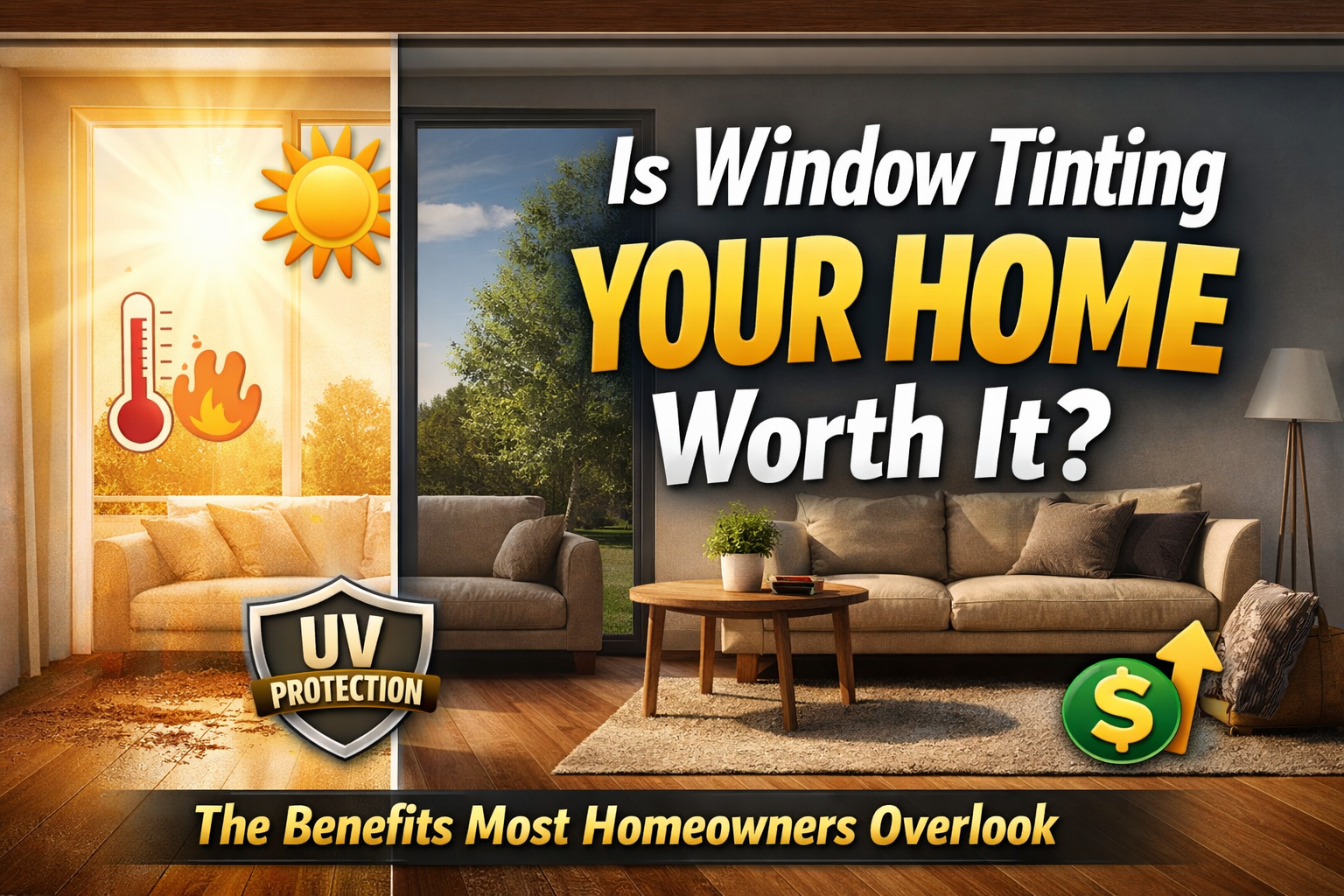
The Sunlight Illusion
There is a moment most homeowners recognize without quite naming it. The late afternoon sun pours through the windows, casting long golden lines across hardwood floors, warming the room in a way that feels almost cinematic. It is the kind of light people chase when they buy a home. Open, bright, alive.
Then you sit down.
The couch is warmer than it should be. The television becomes a mirror. The air feels heavy in one corner and cool in another. Months later, you notice the quiet fade of a rug, the dulling of wood, the slow bleaching of fabrics that once felt rich and new.
What looks like a luxury is quietly working against you.
This is where the conversation around window tinting often goes wrong. Many people assume it is about darkening glass, about aesthetics, about dialing down brightness. In reality, it is something else entirely. It is a performance upgrade hiding in plain sight.
Window tinting is not just about appearance. It is about comfort, protection, and efficiency working together in a way most homeowners do not fully consider.
And that gap between perception and reality is exactly why its value is so often underestimated.
What Residential Window Tinting Actually Does Beyond the Aesthetic
At its core, residential window film is a control system. It manages what passes through your glass and what does not. Heat, light, and ultraviolet energy are filtered, balanced, and redirected before they ever settle into your living space.
That shift changes everything.
Instead of sunlight overwhelming a room, it becomes moderated. Instead of heat building unevenly, it is reduced before it has a chance to accumulate. Instead of ultraviolet exposure quietly damaging interiors, it is largely blocked at the source.
Research from energy authorities consistently points to the same conclusion. Window film is one of the most efficient ways to reduce solar heat gain, cut glare, and limit UV exposure without replacing the windows themselves. It is not a cosmetic tweak. It is a functional upgrade.
And unlike heavy blinds or closed curtains, it does not ask you to give anything up. The view remains. Natural light stays present. The openness of the home is preserved.
There is also a detail that tends to separate average results from exceptional ones. Performance is not just about the film itself. It is about how it is selected and how it is installed. The parallel is easy to see in automotive work. Precision matters. Materials matter. Application matters. The difference between a rushed job and a refined one is visible every single day.
The Overlooked Benefits That Actually Matter
Comfort That You Feel Immediately
The first change is often the simplest and the most noticeable. Rooms stop fighting themselves. The corner that used to feel like a greenhouse begins to match the rest of the space. The couch near the window is no longer something you avoid in the afternoon.
Hot spots disappear. Temperature becomes consistent. The home feels balanced in a way that is hard to describe until it happens.
Spaces that were once tolerated become usable again.
Lower Cooling Demand and Energy Costs
Sunlight carries heat, and untreated glass lets a significant portion of that heat inside. High quality window film can reject a large percentage of that solar energy, in some cases approaching seventy eight percent.
That reduction has a direct effect on your cooling system.
Air conditioning units cycle less aggressively. Energy use drops during peak months. The system itself experiences less strain over time.
In many cases, this is considered one of the fastest payback upgrades in home efficiency. It begins working the moment it is installed and continues quietly every day after.
UV Protection That Quietly Saves Thousands
Ultraviolet radiation is one of the most underestimated forces inside a home. It does not announce itself, but it leaves a trail.
Floors fade. Upholstery loses depth. Artwork softens and discolors. Curtains age faster than they should.
Quality window film can block up to ninety nine percent of these UV rays. That is not just protection. It is preservation.
Instead of replacing or refinishing over time, you extend the life of what you already own. The value is not immediate in a dramatic way, but it compounds in a way that becomes impossible to ignore.
Glare Reduction Without Losing Natural Light
There is a difference between brightness and harshness. One feels energized. The other feels intrusive.
Window film keeps the light but removes the edge.
Screens become easier to see. Televisions stop competing with reflections. Laptops can be used anywhere in the room, not just in carefully chosen corners.
The space remains bright, but it becomes comfortable to live in.
Daytime Privacy Without Closing Yourself Off
Privacy often comes at the cost of openness. Blinds go down. Curtains stay closed. The outside world disappears along with the view.
Certain window films shift that dynamic.
From the outside, visibility is reduced. From the inside, clarity remains. You keep the sense of space without feeling exposed.
It is a subtle change, but it alters how a home feels throughout the day.
Year Round Performance Not Just Summer
It is easy to think of window tinting as a summer solution. Heat comes in, film pushes it back out.
Simple.
But some films are designed to do more.
Low emissivity technology helps retain indoor heat during colder months by reducing the amount that radiates outward through the glass. The same system that keeps excess heat out in summer helps keep warmth in during winter.
It reframes the entire idea.
This is not just a seasonal fix. It is a year round upgrade that works quietly in the background, regardless of the temperature outside.
When Window Tinting Is Actually Worth It
Window tinting delivers its strongest return when the problem is already visible, even if it has not been fully defined.
Homes with large sun facing windows are often the first to feel it. The light is beautiful, but the heat builds quickly and unevenly. Rooms that overheat during the day or become uncomfortable in the afternoon are prime candidates for improvement. These are not minor annoyances. They are signals that energy is entering the home unchecked.
There is also the question of what is inside the home. High end flooring, custom furniture, carefully chosen artwork. These are not just design choices. They are investments. Without protection, they slowly degrade under constant UV exposure. Window film steps in as a quiet safeguard, extending the life and appearance of everything the sunlight touches.
Glare is another tipping point. If you find yourself adjusting blinds throughout the day, repositioning screens, or avoiding certain areas at peak sunlight hours, the problem is already shaping how you live in space.
Then there is the financial comparison that often surprises people.
Replacing windows is a major undertaking with a significant upfront cost. Window film, by contrast, enhances the performance of existing glass at a fraction of that price. It is not a shortcut. It is a strategic upgrade.
In many cases, homeowners begin to see a return within one to three years, depending on climate, window exposure, and film selection. After that, the savings and comfort gains continue without additional effort.
When It Might Not Be the Right Move
There is value in knowing when not to move forward.
If your windows are already failing, with seal issues, drafts, or structural wear, film will not solve those underlying problems. In those cases, replacement is the more appropriate path.
Climate also plays a role. In areas with limited sun exposure, the impact of window tinting may be less noticeable, particularly when it comes to cooling demand and glare reduction.
Aesthetics matter as well. Some films, especially those designed for privacy or reflectivity, can alter how a home looks from the outside. For some homeowners, that shift is a benefit. For others, it may not align with the desired appearance.
The common thread here is not whether window tinting works. It does. The question is whether it is the right solution for your specific situation.
And that is where selection becomes critical. The type of film, its performance characteristics, and how it interacts with your home all matter as much as the decision to install it in the first place.
Why Installation Quality Changes Everything
There is a point where the conversation shifts from what the product can do to how well it is executed.
Window film is precise by nature. Its performance depends on how cleanly it is applied, how accurately it is cut, and how well it bonds to the glass over time. Small imperfections are not just cosmetic. They can affect longevity, clarity, and overall effectiveness.
This is where experience becomes visible.
The same way automotive tinting demands exact application, residential film requires skilled hands. The margin for error is small, and the difference between average work and refined work shows up every day in how the film looks and performs.
There is a reason environments that specialize in high end film application tend to produce better results. Attention to detail, controlled processes, and an understanding of how materials behave all come into play.
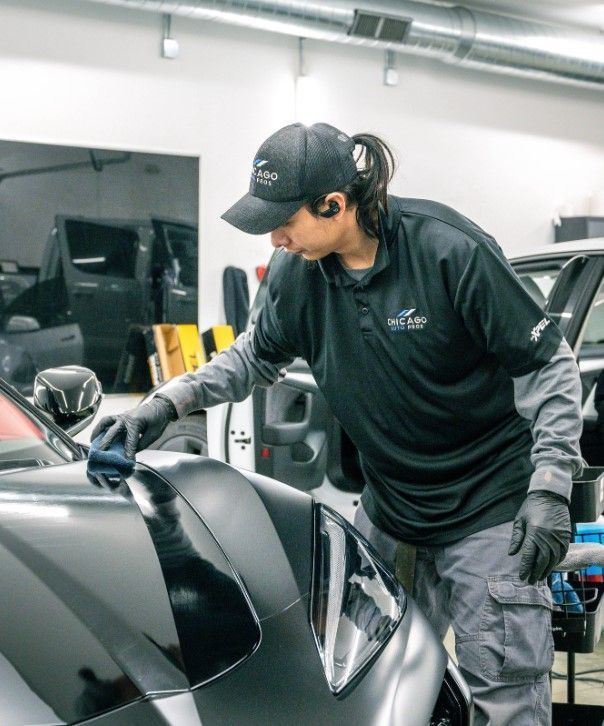
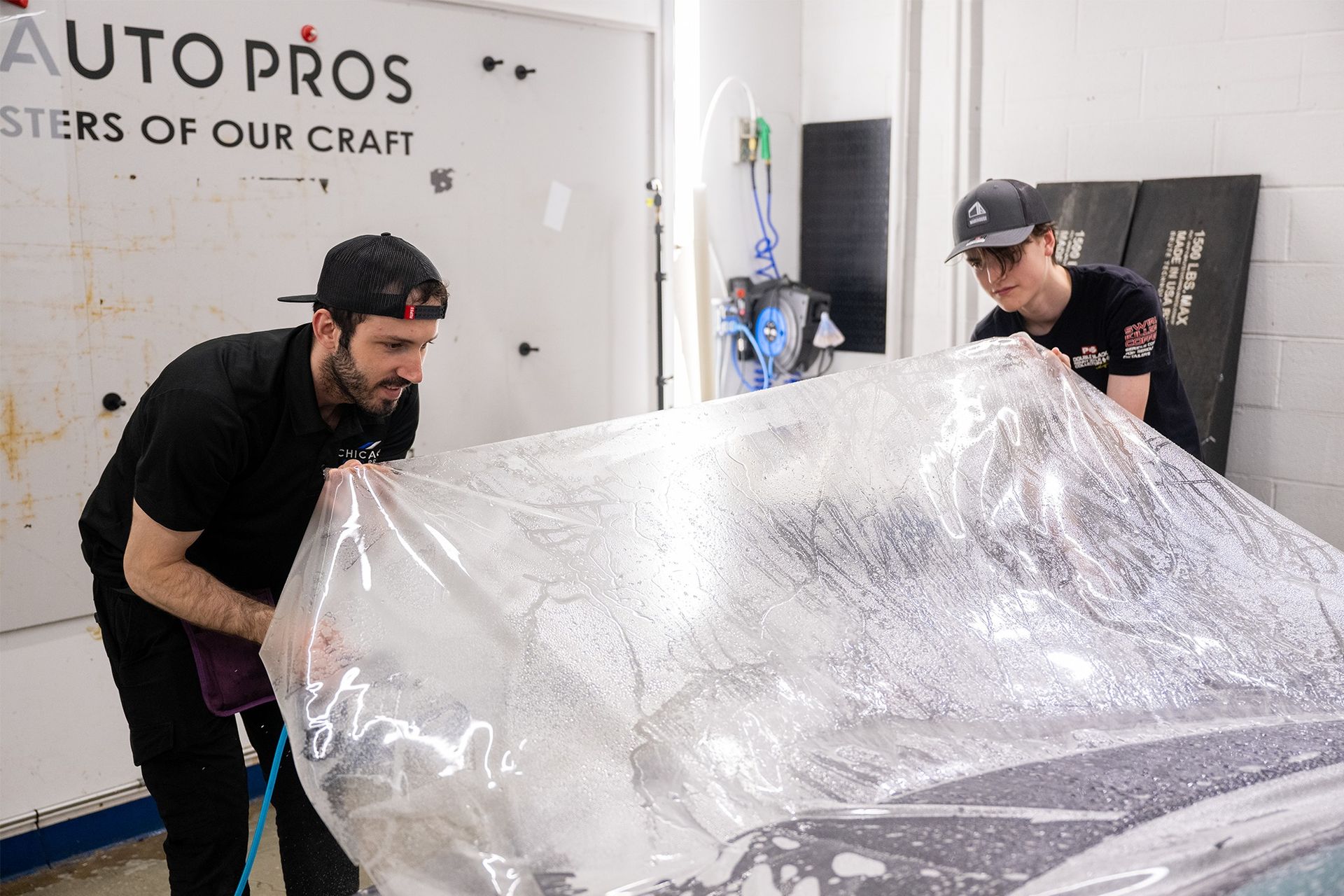
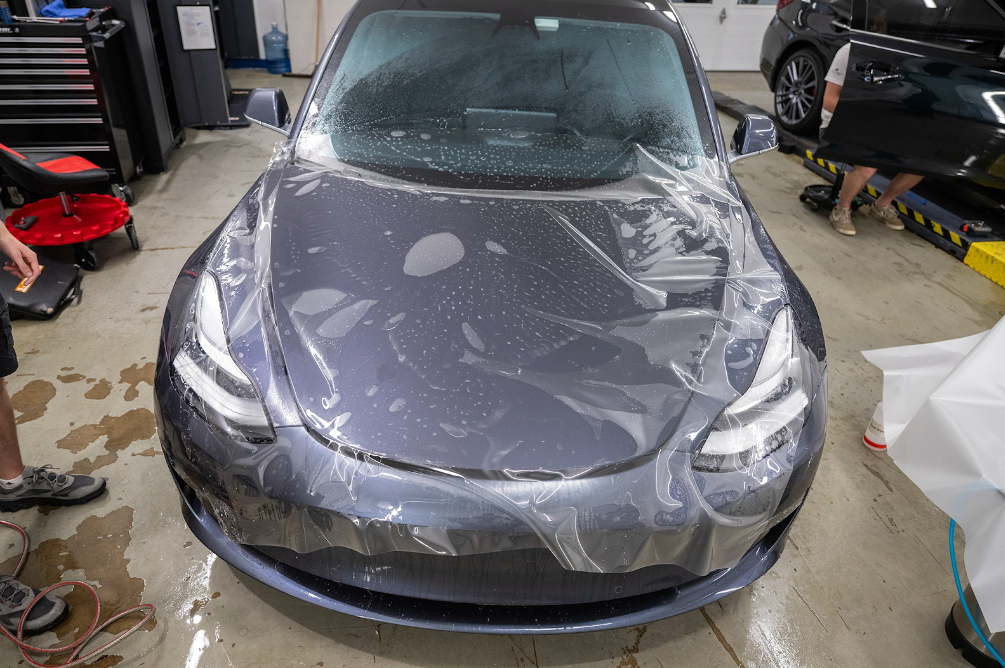
It is a mindset as much as a service. The kind of approach seen in meticulous automotive detailing spaces like Chicago Auto Pros, where film is treated not as an accessory but as a precision product. That level of care translates naturally into residential work, even if the setting is different.
Because in the end, the film itself is only part of the equation. The outcome is defined by how well it is installed.
The Real Answer Is It Worth It
The short answer is yes, but only if you are asking the right question.
If your goal is to create a more comfortable home, protect what is inside it, and improve efficiency without taking on the cost and disruption of replacing your windows, then window tinting earns its place quickly.
The mistake many homeowners make is reducing the conversation to heat alone. It is not just about making a room cooler. It is about how multiple benefits layer together in a way that changes how a space feels and performs every day.
Comfort becomes consistent rather than conditional.
Ultraviolet protection works quietly in the background, preserving what you have invested in.
Glare disappears without sacrificing the light that makes a home feel open.
Interiors hold their color, their texture, and their quality for longer than expected.
It is not one dramatic shift. It is a collection of smaller improvements that compound into something much more noticeable over time.
The Upgrade Most People Do Not Realize They Need
Think back to that original scene. Sunlight stretches across the room, warm and inviting, almost cinematic in its appeal.
Now imagine that same light, but without the drawbacks. The room stays comfortable. The air feels balanced. The surfaces beneath it remain unchanged month after month. The brightness stays, but the harshness is gone.
Nothing about the space looks drastically different at first glance. And that is the point.
Window tinting is an invisible upgrade with a visible impact. It does not demand attention, but it quietly improves the way your home functions every single day.
And when it is done right, with the same level of precision and care you would expect from high end automotive film work, the results speak for themselves.
Share with your friends


We Make Your Car Look Beautiful
Founded with an unquenchable desire for automotive perfection, Chicago Auto Pros is a leader in paint protection efforts and aesthetic vehicle detailing services in Chicago, Illinois. When you bring your automobile to our Chicago-based detailing shop, you are sure to experience unmatched integrity, customer service excellence, and above all, absolute automotive perfection from the inside out. Choose the right auto detailing team - choose Chicago Auto Pros!
Lombard Location
207a Eisenhower Lane South, Lombard, Illinois 60148, United States
Glenview Location
2075 Johns Ct, Glenview, IL, 60025, United States
St. Charles Location
315 Industrial Dr, St Charles, IL 60174, United States