Tint, PPF, or Ceramic First? The Correct Order (And Why It Matters)
February 14, 2026
Tint, PPF, or Ceramic First? The Correct Order (And Why It Matters)
Why This Question Matters More Than You Think
If you have ever searched “tint or ceramic first” you already know how messy the answers get. One shop says one thing. A dealer bundles everything together with vague promises. Reddit threads spiral into arguments where everyone sounds confident and no one agrees. For car owners who actually care about protecting their vehicle, the noise is overwhelming.
Here is the part most people miss. The order is not just preference. It is chemistry, adhesion science, and long term performance. Get it wrong and you can waste thousands of dollars, shorten the lifespan of your protection, or create issues that require redoing work that should have been permanent.
The truth is simpler and far more settled than the internet makes it seem. For most daily drivers, the correct order is window tint first, paint protection film second, and ceramic coating last. This sequence is not a trend or a sales tactic. It is how the materials are designed to work together, and the science backs it up.
The Short Answer
For Skimmers Who Just Want It Straight
Tint first because it is applied to interior glass and never interferes with paint prep or exterior protection.
PPF second because it must bond directly to bare, corrected paint to adhere properly and last.
Ceramic lasts because it is engineered to sit on top of paint or film as a final protective layer.
This order is supported by PPF manufacturers, coating chemistry, and professional installation standards.
What Each Product Actually Does
Clarifying the Roles
Window Tint
Interior Comfort and UV Defense
Window tint is a film applied to the inside surface of your vehicle’s glass. Traditional dyed or metallic tints primarily darken the glass and reduce glare, but they offer limited heat rejection and can fade over time. Modern ceramic tint is a different category entirely. It uses advanced ceramic particles to block infrared heat and ultraviolet radiation without relying on darkness.
This matters especially in Chicago. Summer sun can turn a parked car into an oven, while low winter sun creates blinding glare during daily commutes. High quality ceramic tint helps regulate cabin temperature, reduces eye strain, and protects interior materials like leather and plastics from cracking and fading. It improves comfort year round without affecting exterior paint protection in any way.
Paint Protection Film
Impact and Abrasion Shield
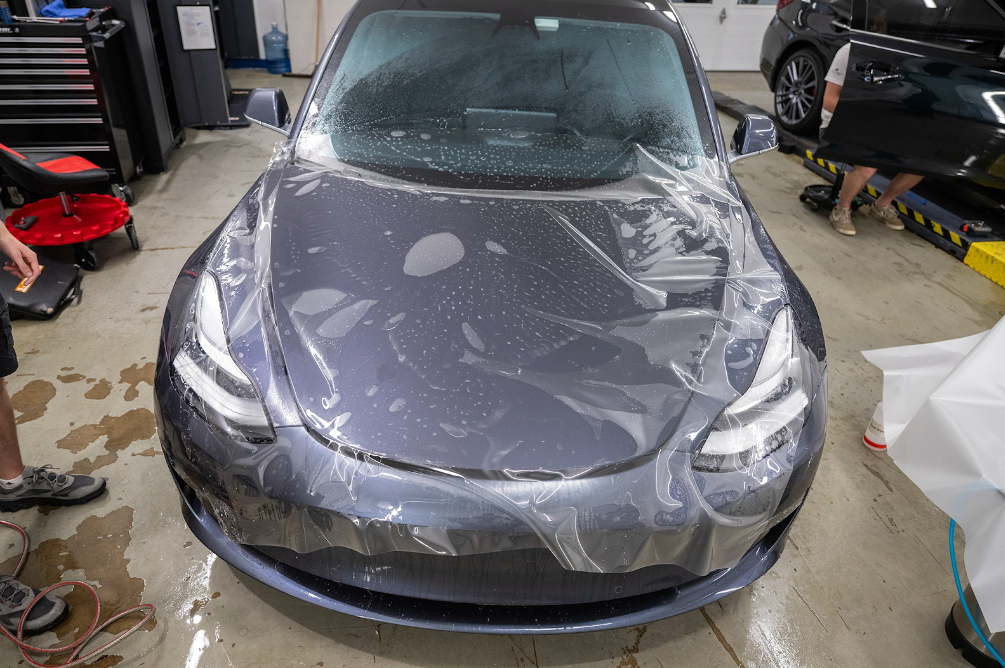
Paint protection film is a thick urethane layer usually between six and eight mils designed to absorb rock chips, road debris, and light abrasions before they reach your paint. Many modern films are self healing, meaning light scratches disappear when exposed to heat from the sun or warm water.
For this film to work properly, installation must be done on bare, surgically clean paint. Any wax, sealant, or coating left on the surface can interfere with how the adhesive bonds. This is why professional installation standards matter. Proper prep includes washing, decontamination, polishing when needed, and a final solvent wipe to ensure the paint is completely clean and ready to accept the film.
Ceramic Coating
Chemical Bond Not Physical Armor
Ceramic coatings are liquid polymers that chemically bond to paint or paint protection film. Their strength is not thickness but chemistry. They enhance gloss, add chemical resistance, block ultraviolet damage, and create a hydrophobic surface that makes washing easier.
What ceramic coatings do not do is stop rock chips or deep scratches. They are microns thick, far thinner than paint protection film. Compared to wax, ceramic coatings last years instead of weeks or months. This durability is exactly why ceramic is a finishing layer rather than a foundation. It is designed to seal and protect what is already there, not replace physical protection underneath.
Why the Order Matters
Adhesion, Chemistry, and Longevity
Adhesion Science
Film First Coating Last
Paint protection film uses pressure sensitive adhesives that rely on direct contact with high energy paint surfaces. These adhesives need a surface that allows proper wetting and mechanical bite during installation. Ceramic coatings are intentionally slick and water repelling, which is the opposite of what film adhesives want.
When film is installed over a coated surface, bonding becomes inconsistent. This increases the risk of edge lift, trapped air, visible bubbles, and early failure. These issues are most common on curved panels where adhesion demands are highest.
Installing film first and coating last aligns with how the materials are engineered to perform.
PPF Over Ceramic Versus Ceramic Over PPF
Across the industry, the consensus is clear. Installing paint protection film over ceramic coating is possible in theory but not recommended in practice. Adhesion and long term durability suffer, and many installers will not warranty work done this way.
Ceramic coatings, on the other hand, are engineered to sit on top of paint protection film. This is why many manufacturers offer factory paired systems where film comes with a dedicated ceramic top layer. It reinforces the intended stack order.
Physical protection first, chemical protection last.
The Correct Order Explained Step by Step
Step 1
Window Tint First
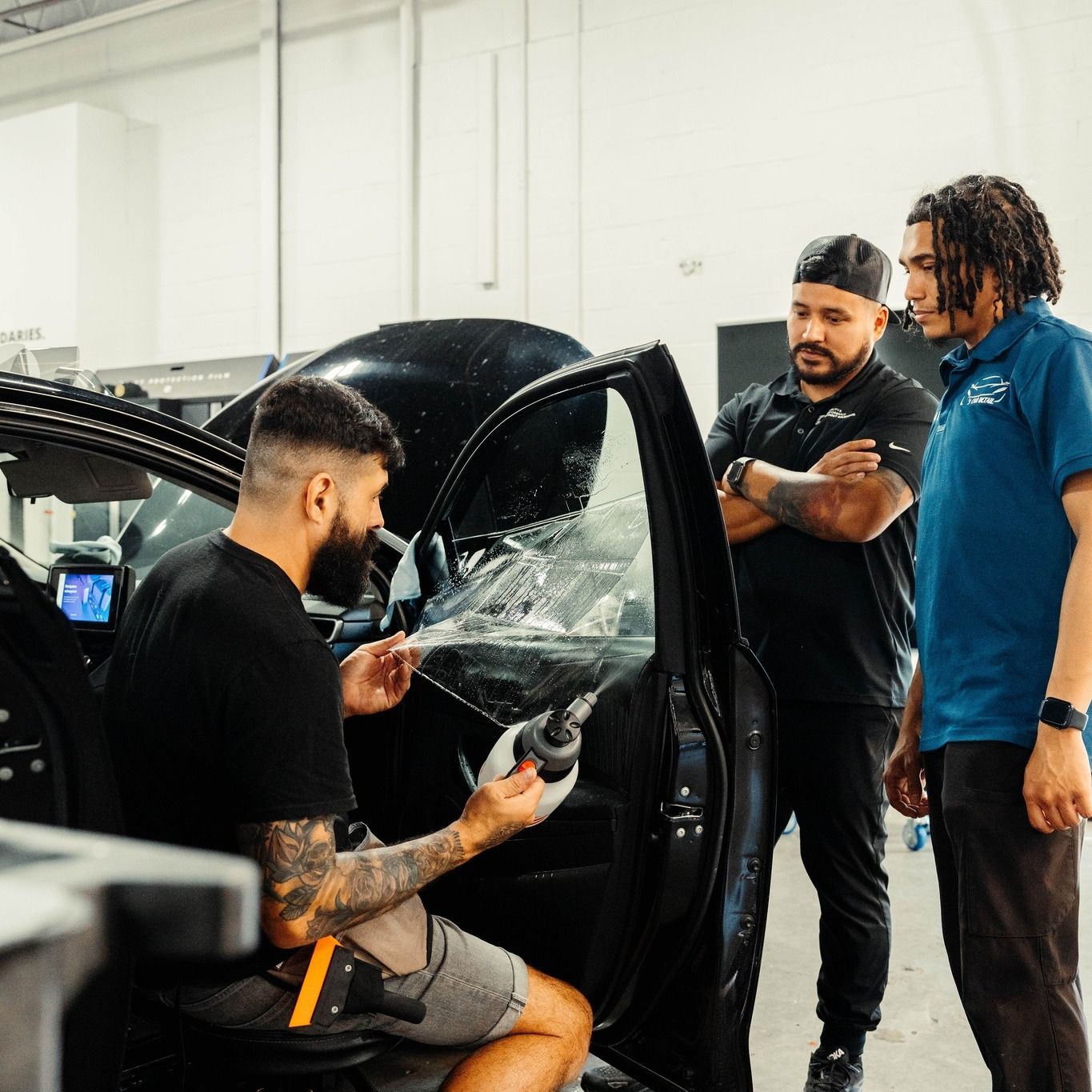
Window tint can technically be installed at almost any point because it lives on the interior glass, not the paint. That said, doing it first is the smartest move. Fresh tint needs time to cure, and completing it early keeps technicians from repeatedly opening doors or lowering windows after the exterior has been fully prepped for protection.
Curing is an important part of the tint process. During the first few days, the film is still settling and moisture is evaporating from between the glass and the adhesive. This is why reputable shops often recommend limited window use for a short period after installation.
There are also practical details worth understanding. Visible light transmission laws determine how dark your tint can legally be, and professional shops follow these limits carefully. During the curing phase, it is normal to see a slight haze or small water bubbles trapped under the film. These disappear on their own as the tint fully cures and are not defects.
Step 2
Paint Protection Film on Bare, Corrected Paint
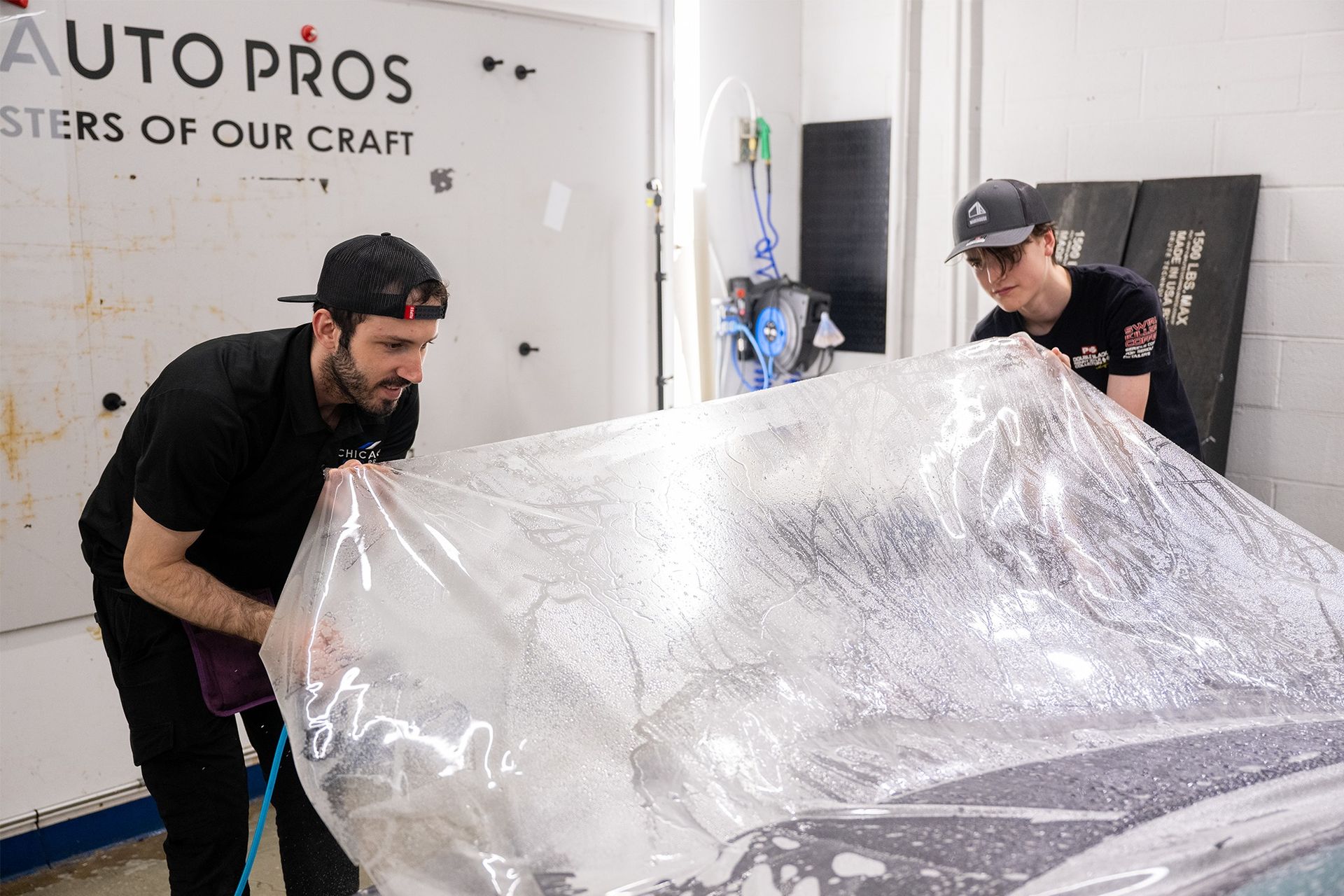
Paint protection film must be installed on completely bare paint to function correctly. The preparation process is thorough by design. It begins with a full wash to remove surface dirt, followed by mechanical decontamination to pull embedded particles from the paint. Polishing is often performed to remove swirls or defects, and the surface is then wiped down with a solvent solution to remove any remaining oils or residues.
Waxes and coatings must be absent at this stage. Any slick or protective layer left on the paint interferes with the film’s adhesive, increasing the risk of lifting or failure over time. This is also why professional shops matter so much during this step. Proper prep is time consuming and detail oriented, but it directly determines how long the film will last and how good it looks.
After installation, paint protection film has its own curing expectations. Vehicles are typically advised not to be washed for several days, and full curing can take weeks. During this time, minor moisture pockets may appear and then disappear naturally as the film settles.
Step 3
Ceramic Coating Last on Paint and or PPF
Ceramic coating is the final step because it is designed to seal and enhance whatever sits beneath it. When applied over paint protection film, it improves chemical resistance, blocks ultraviolet damage, and adds strong hydrophobic behavior that makes washing easier. Dirt, road grime, and water spots have a harder time clinging to coated surfaces.
Applying ceramic across both exposed paint and protected areas creates a uniform gloss and consistent maintenance experience. This is the lock it in step that ties everything together, preserving the look of the vehicle while reducing long term upkeep.
What Happens If You Get the Order Wrong
Ceramic First Then Paint Protection Film
Installing ceramic coating before paint protection film introduces real risks. Ceramic creates a slick and water repelling surface that pressure sensitive adhesives struggle to bond to. On complex panels with curves and edges, this can lead to lifting, trapped air, or bubbles that appear days or weeks later.
Heat and pressure distribution during installation can also be affected when multiple ceramic layers are present. In the real world, the most common fix is removing or polishing off the ceramic coating entirely before laying film. That means time lost and money effectively wasted.
Paint Protection Film Without Ceramic Versus Ceramic Without Paint Protection Film
Paint protection film without ceramic offers excellent defense against rock chips and abrasion, especially on high impact areas. However, the film may stain more easily over time and require more effort to keep clean without a top layer.
Ceramic coating without paint protection film delivers gloss, ultraviolet protection, and easier washing, but it does not stop physical damage. Rock chips and deep scratches still reach the paint because the coating is extremely thin.
The ideal setup depends on priorities, but understanding these tradeoffs makes it clear why combining both in the correct order delivers the most complete protection.
Situational Tweaks
Because Not Every Car Owner Is the Same
Not every vehicle follows the same protection path, and that is okay as long as the order stays intact. For budget conscious owners, staged protection is often the smartest approach. Window tint comes first for comfort and interior protection. Paint protection film can be added next on high impact areas like the front bumper and hood. Ceramic coating can follow later as an upgrade without undoing previous work, as long as it is applied after the film.
New vehicles often arrive with dealer applied sealants or waxes. These products are not true ceramic coatings, but they still need to be removed before paint protection film is installed. Professional shops account for this during preparation, stripping these layers so the film can bond correctly.
Some newer paint protection films include hydrophobic or coated top layers. These reduce water spotting and improve gloss, but many owners still choose to add a compatible ceramic coating for extended durability and easier maintenance. Even with these films, the logic stays the same. Film first, coating last.
Chicago driving adds its own challenges. Road debris, construction zones, salt, and dramatic weather cycles all increase wear on paint and glass. These conditions make proper sequencing even more important, especially for daily driven vehicles that see all four seasons.
Why Professional Installation Changes Everything
Soft Chicago Auto Pros Perspective
The products matter, but the process matters more. Professional installation ensures proper sequencing, meticulous surface preparation, and compatibility between materials. Prep quality determines adhesion. Product pairing determines longevity.
Skipping steps or rushing the process almost always shows later.
Reputable shops follow manufacturer approved methods for each product, from paint correction standards to curing timelines. This is also where integrated protection packages shine, combining tint, paint protection film, and ceramic coating in a way that is designed to work together from day one.
This is the approach trusted by professional installers in Chicago who work on daily drivers year round. Vehicles are treated as long term investments, not quick turnarounds, and the protection is built to handle real world conditions.
Final Takeaway
The Simple Rule to Remember
The rule is straightforward for a reason. Tint the glass. Protect the paint with paint protection film. Lock it all in with ceramic coating.
Follow this order and you avoid compatibility issues, maximize durability, and get the full value out of every layer of protection. More importantly, you gain peace of mind knowing your vehicle is protected the right way from the start, no matter where or how often you drive it.
Share with your friends
We Make Your Car Look Beautiful
Founded with an unquenchable desire for automotive perfection, Chicago Auto Pros is a leader in paint protection efforts and aesthetic vehicle detailing services in Chicago, Illinois. When you bring your automobile to our Chicago-based detailing shop, you are sure to experience unmatched integrity, customer service excellence, and above all, absolute automotive perfection from the inside out. Choose the right auto detailing team - choose Chicago Auto Pros!
Lombard Location
207a Eisenhower Lane South, Lombard, Illinois 60148, United States
Glenview Location
2075 Johns Ct, Glenview, IL, 60025, United States
St. Charles Location
315 Industrial Dr, St Charles, IL 60174, United States