

The Scary Truth About Cheap Window Tint
The Scary Truth About Cheap Window Tint
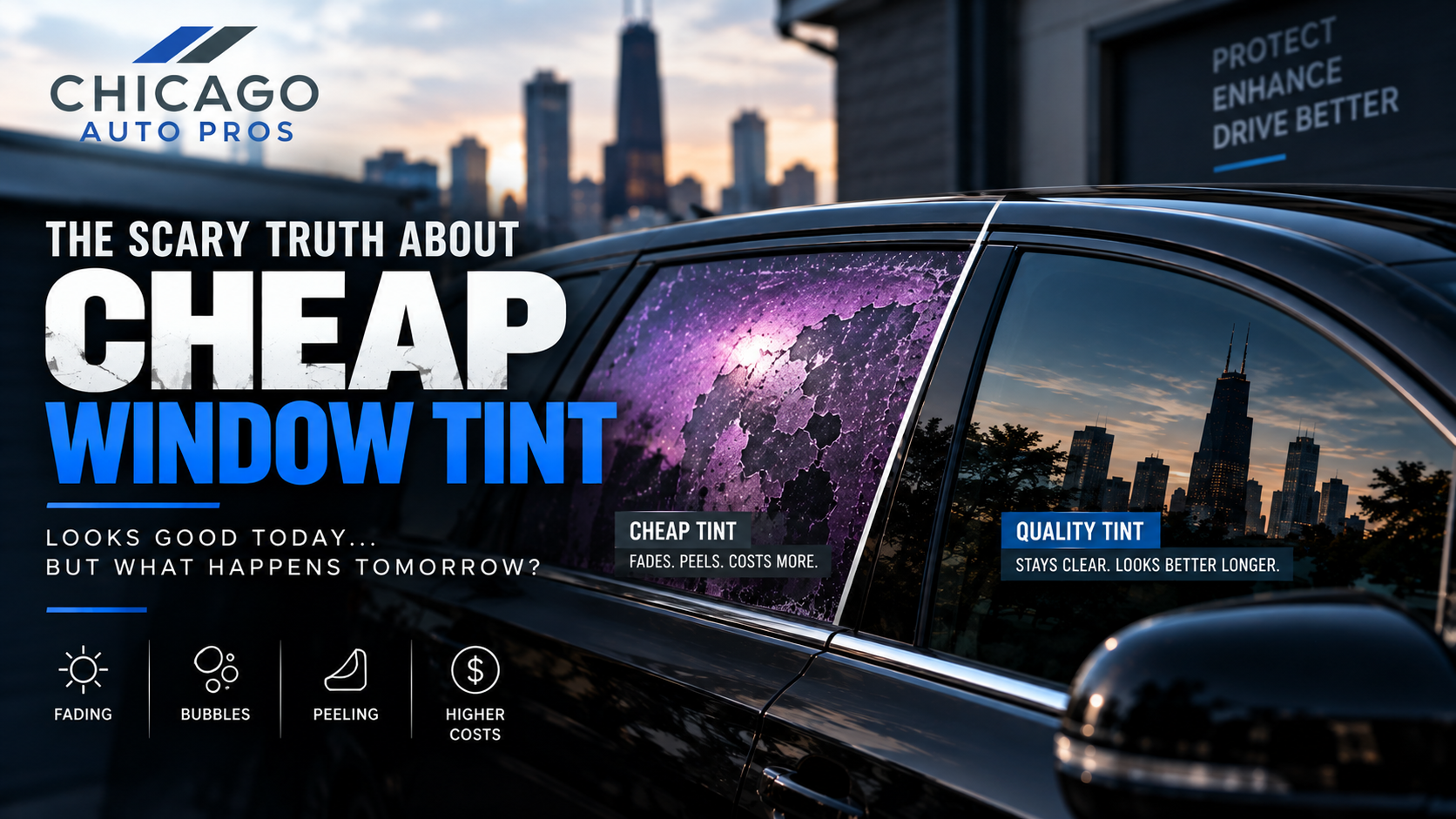
The Cheapest Tint Can Become the Most Expensive
A cheap window tint quote can be difficult to ignore.
If one shop offers to tint your vehicle for considerably less than another, the decision can seem simple. Both vehicles may look nearly identical when they leave the shop. The windows are darker, the appearance is sharper, and you saved money.
The difference often appears later.
What are you actually giving up when you choose a cheap window tint?
An inexpensive tint job is not automatically a bad one. A reputable shop may offer a promotion or a more basic film series. Price alone does not determine quality.
The concern is what might be behind an unusually low price.
Basic film, unknown materials, rushed preparation, inexperienced installation, or limited warranty coverage can turn an attractive price into a much more expensive problem later.
Film quality, installation quality, performance, appearance, and warranty support all matter long after the invoice has been paid.
Cheap Tint Can Look Fine at First
This is what makes bargain tint convincing.
Initially, it may deliver exactly what the customer wanted. The windows look darker, glare may be reduced, privacy improves, and the vehicle has a sharper appearance.
Time can reveal what the initial inspection cannot.
Lower quality or deteriorating film may eventually develop purple or brown discoloration, bubbling, blistering, peeling edges, cloudiness, or separation between the film layers.
Once the film or adhesive begins failing, these problems are not always something an installer can simply repair. The old film may need to be completely removed, the adhesive cleaned from the glass, and new film installed.
Purple Tint Is Usually Telling You Something
Purple tint has become one of the most recognizable signs of an aging tint job.
Some inexpensive or older dyed films can experience color changes as their materials deteriorate from prolonged heat and ultraviolet exposure. A film that originally appeared neutral can gradually become purple, brown, or inconsistent.
Established film manufacturers often specifically address color stability and defects such as bubbling, blistering, cracking, and delamination within applicable warranty terms.
That does not mean premium films can never experience a problem. It means customers have documented information about what they purchased and what happens if something goes wrong.
The Film Is Only Half of the Tint Job
A great film can still produce disappointing results when it is installed poorly.
Automotive glass needs careful preparation before film is applied. Dust, lint, fingerprints, and other contamination can become trapped between the film and glass.
Installation technique matters too.
Proper positioning, contamination control, edge work, finishing, and curing all influence the final appearance. Fresh film also needs time to cure, which is why customers should receive clear instructions about operating their windows and what to expect during the first few days.
At Chicago Auto Pros, professional window tinting is about more than selecting how dark you want your windows.
Customers should understand what film is being installed, what it is designed to accomplish, how to care for it, and what warranty support comes with it.
Premium film installed poorly can still produce a poor result.
The product and installer have to work together.
Darker Does Not Automatically Mean Cooler
One of the easiest tint myths to believe is that darker glass automatically means better heat control.
It does not.
A dark inexpensive film may provide privacy and reduce visible glare while delivering less solar heat control than a film engineered specifically for stronger solar performance.
That distinction matters during a Chicago summer, especially when a vehicle spends hours sitting outside or regularly handles long commutes.
Simply looking at the shade does not tell you how the film performs.
Look Beyond the Shade
There are several specifications worth understanding.
Visible light transmission describes how much visible light passes through the glass and film.
Total solar energy rejected provides a broader measurement of solar energy rejection.
Infrared rejection is commonly used when discussing heat performance, although testing methods can vary between manufacturers.
UV rejection describes the film's ability to reduce ultraviolet exposure.
Glare reduction can affect everyday driving comfort during bright mornings, afternoon sun, snow glare, and wet road conditions.
The important thing is comparing specifications for the exact film being installed rather than relying on broad terms such as ceramic, premium, or maximum heat rejection.
Cheap Tint Gets Expensive When It Has to Come Off
Installing tint costs money.
Removing a failed tint can cost more.
Old film may tear or shred during removal. Adhesive can remain stuck to the glass and require additional labor. Rear windows also require careful removal because of integrated defroster lines.
Then the replacement process begins.
You paid for the inexpensive tint.
You pay to remove it.
Then you pay again for a replacement tint.
That is why the first installation matters. The true cost of window tint includes more than the number on the original quote.
Cheap Tint Can Also Create Legal Problems
Another potential problem has nothing to do with appearance.
The finished windows need to account for applicable tint requirements.
A common mistake is assuming the percentage printed on the film tells you exactly how much visible light will pass through the finished window.
Factory glass already has its own visible light transmission. Once film is installed, the glass and film work together to determine the final result.
A professional installer should therefore consider the existing glass, film shade, vehicle configuration, applicable Illinois requirements, and final measured visible light transmission.
Simply requesting the darkest tint available can create unnecessary problems.
The better approach is selecting a film that considers appearance, performance, existing glass, and applicable requirements together.
What Should You Ask Before Paying for a Window Tint?
A tint quote should tell you more than the price.
Before booking, ask:
What exact film brand and series are you installing?
Can I see the specifications for that film?
What does the warranty cover?
Does warranty coverage include labor?
Who handles the warranty if something goes wrong?
What will my final visible light transmission be?
How long should the film cure?
What should I expect immediately after installation?
Who will actually be installing the film?
A professional shop should be able to answer those questions clearly.
Vague answers deserve more attention than a low price.
What Professional Tint Installation Should Look Like
Professional tinting should involve more than choosing a shade and applying film.
Customers should know the manufacturer, product series, shade, specifications, and applicable warranty.
The glass should be properly prepared. Installation should receive careful attention around positioning, edges, contamination, and the finished appearance.
Film selection should also match what the driver actually wants.
Some drivers prioritize appearance and privacy. Others care more about solar performance, glare reduction, or UV protection. Applicable Illinois requirements should also be part of the conversation.
At Chicago Auto Pros, the goal is to help customers understand what is being installed and why it makes sense for their vehicle.
A professional tint job combines the right film with careful preparation, experienced installation, clear curing instructions, and documented product information.
Wrap Up
The Scary Part Is Not the Price
The scary truth about cheap window tint is not that inexpensive tint is automatically bad.
It is what you might not know about it.
A legitimate promotion or basic film can still make sense. The real concern begins when a low price comes with unknown film, questionable installation, unclear specifications, weak performance, or poor warranty support.
Those compromises can turn an inexpensive installation into an expensive correction later.
For Chicago drivers, Chicago Auto Pros provides professional automotive window tinting with an emphasis on product knowledge, appropriate film selection, and experienced installation.
Do not ask only how much the tint costs today. Ask what film is being installed, how it performs, who is installing it, and what happens if something goes wrong tomorrow.
Offer ends October 30, 2026. Claim it today!
Share with your friends


We Make Your Car Look Beautiful
Founded with an unquenchable desire for automotive perfection, Chicago Auto Pros is a leader in paint protection efforts and aesthetic vehicle detailing services in Chicago, Illinois. When you bring your automobile to our Chicago-based detailing shop, you are sure to experience unmatched integrity, customer service excellence, and above all, absolute automotive perfection from the inside out. Choose the right auto detailing team - choose Chicago Auto Pros!
Lombard Location
207a Eisenhower Lane South, Lombard, Illinois 60148, United States
Glenview Location
2075 Johns Ct, Glenview, IL, 60025, United States
St. Charles Location
315 Industrial Dr, St Charles, IL 60174, United States