

Why and Where to Apply Paint Protection Film (PPF) on Your New Porsche 911?
If you are reading this, it might have something to do with the fact that you like Porsches. They are incredibly desirable vehicles that are as well-engineered as they are durable. Their storied history with endurance racing reinforces the fact that these are vehicles that can be enjoyed in a spirited fashion without worrying about reliability.
With a long life (it’s not unusual or upsetting to see a 911 cross the 100,000 mile mark and a likely series of passionate, enthusiast owners over the years, it’s not hard to find a well-kept example that defies its age.
If you are the lucky owner who specs out a new 911, you may want to apply paint protection film to protect and preserve the factory paint for the long life of the vehicle, especially if you pony up for one of the tasty paint-to-sample colors!
Here are some of the essential areas for paint protection, explain why you might cover your entire car, and share what to look for in a professional installer.
Why would I want paint protection film?
Paint protection film will protect the paint on your vehicle from stone chips. If a stone chip, scratch, or scuff will ruin your day, then that’s all you need to hear. Do it and don’t look back.
Like to speed in your Porsche? At highway speeds (and above), a small pebble becomes a dangerous projectile and will do real damage.
Most PPF brands have a premium version that features a self-healing top coat. This layer shrugs off minor swirl marks. You can use a heat gun or warm water to activate the film’s self-healing properties, which can help minimize or eliminate surface-level scratches in the top coat. Bought a black 911 and want to keep the paint shiny and swirl-free without having a team of technicians polishing it around the clock? You might want to consider wrapping the entire vehicle in PPF to seal in the beauty and make it easy to keep it looking brand new.
What Parts of a Vehicle Need Paint Protection Film?
If you’re wondering where to apply paint protection film (PPF) on your vehicle, you’re not alone. Many car owners, especially those with high-end or performance cars like a 911, want to keep their paint looking flawless. Here are some of the essential areas for paint
protection.
Key Areas That Need Paint Protection Film
Any part of your vehicle that faces frontal exposure while driving should be protected. Here’s why:
When you’re cruising down the highway, debris like rocks and gravel tend to bounce along towards the front of your car. They’re most likely to strike the front-facing surfaces of your car, so all of these are essential for coverage with PPF.
These high-risk areas include:
- Front bumper
- Hood
- Headlights
- Fenders
- Mirrors
- Leading edge of the roof
- A-pillars
- Don’t forget the roof edge and rockers!
This one often gets overlooked, especially on low sports cars like a Porsche. Because these cars sit close to the ground, debris can easily chip the leading edge of the roof. The same holds true for the rockers and rear wheel arches. Those flares are prone to rocks coming off the front wheels of your car. Porsche provides that tiny patch on most 911s to cover the flare, but it’s not big enough and is usually made from inexpensive film that doesn’t look clear or shiny.
Non-Traditional Areas: Do They Need Protection?
Yes — depending on your lifestyle.
One customer of ours requested paint protection film on the passenger side of his car because that’s the side his family walks past in the garage. He was worried about scratches from bicycles and grocery bags. If there’s an area of your vehicle that frequently encounters garage traffic, tight parking spaces, or kids with scooters, it might be worth covering.
Think about it like this:
“Anywhere it would bother you if you got a stone chip — protect it.”
Should You Wrap the Entire Car in PPF?
If you own a black Porsche, or any dark-colored vehicle, you already know the challenge: keeping it clean and swirl-free is a full-time job.
Applying paint protection film to the entire vehicle provides:
- A thick, shiny, self-healing surface
- Resistance to swirls and micro-scratches
- Long-term protection without babying the paint
- Peace of mind when washing or parking in public
If you’re the type who wants your paint to look flawless all the time and don’t want to have to
polish it every weekend, then a full-body PPF wrap is like putting a hard candy shell on your car.
What to Look for in a Paint Protection Film Installer
Choosing the right installer is just as important as the film itself.
✅ Choose a Certified Installer: Look for someone who uses a reputable product, like XPEL paint protection film. XPEL is one of the most trusted names in the industry, and they certify their dealers to ensure quality.
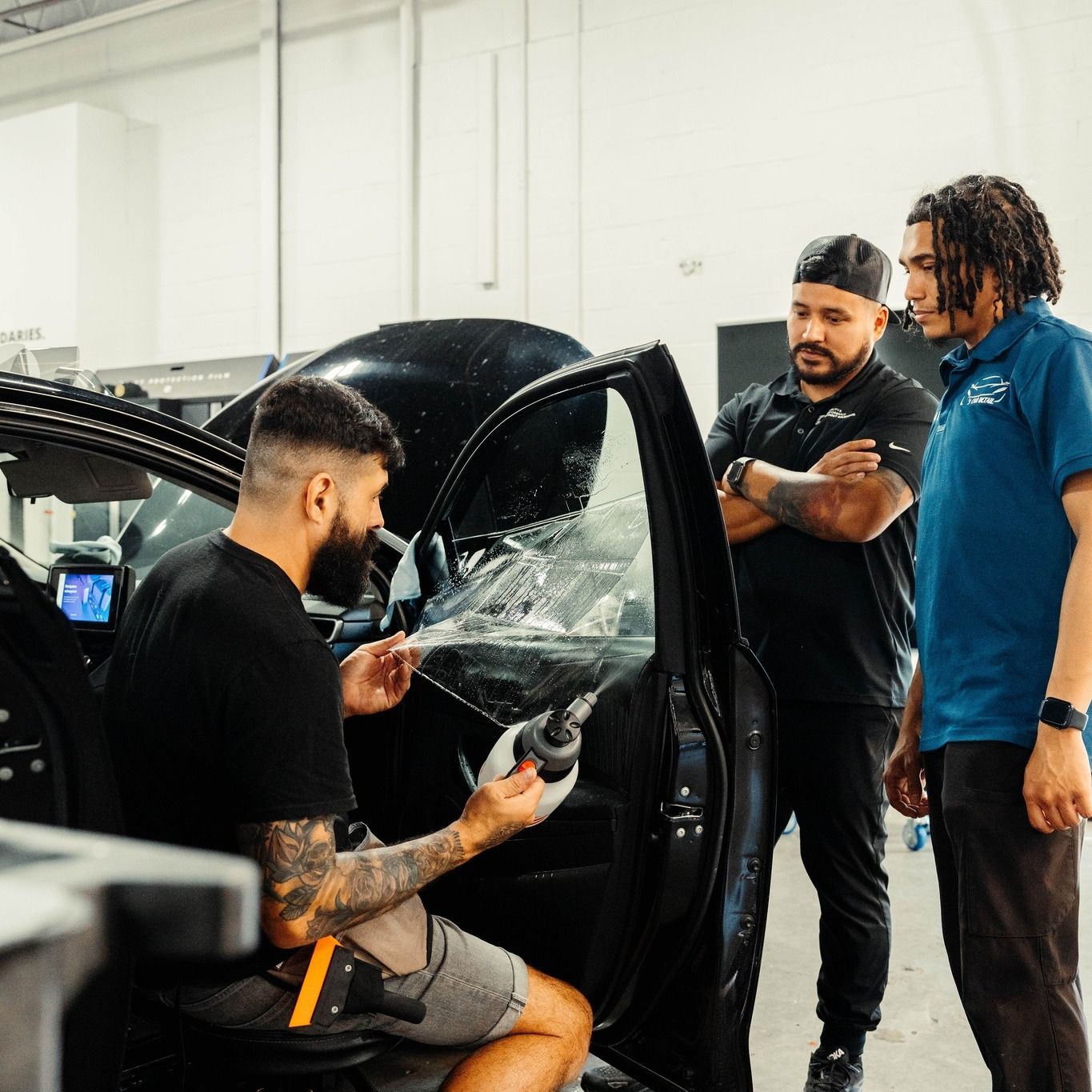
✅ Look for Experience: Paint protection film installation is not beginner work. Many new shops are jumping into the industry, but you don’t want your car to be someone’s training project. Check to make sure they’ve done some 911s in the recent past, so they aren’t trying to figure them out for the first time.
Why? Because in some cases, the film has to be cut directly on the car’s paint. An inexperienced installer could accidentally cut through the film and into your paint. You wouldn’t notice the damage right away, but once the film is removed, the cut lines are clear and the car has to be repainted to fix them.
✅ Ask About Wrapped Edges:
Ask your installer if they use a kit install. This means:
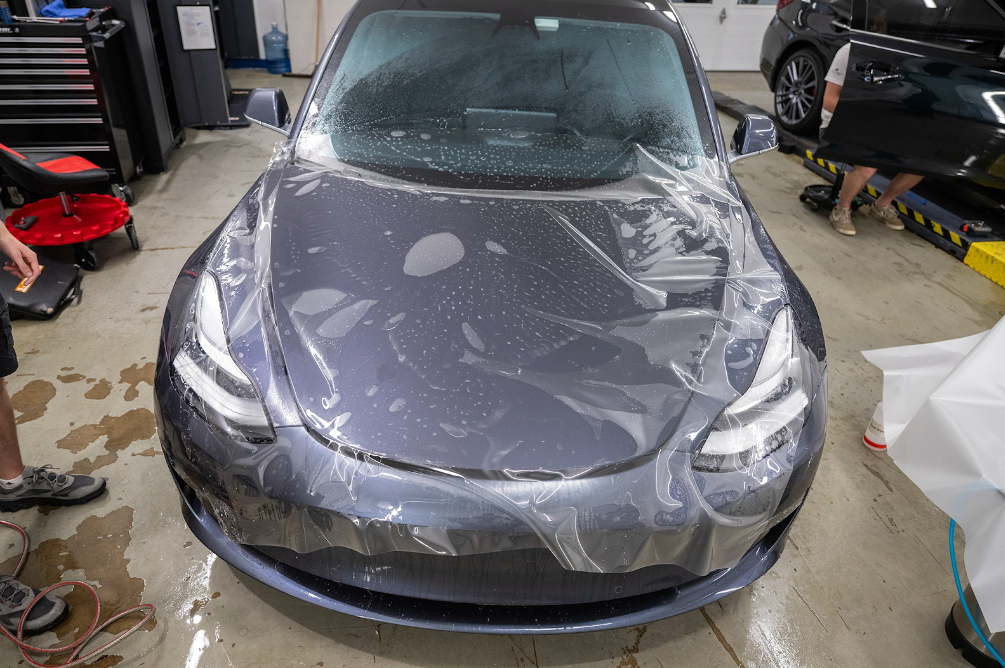
- The film is machine-cut with a plotter
- It’s designed to match specific body panels
- There’s no (or limited) cutting on the car itself
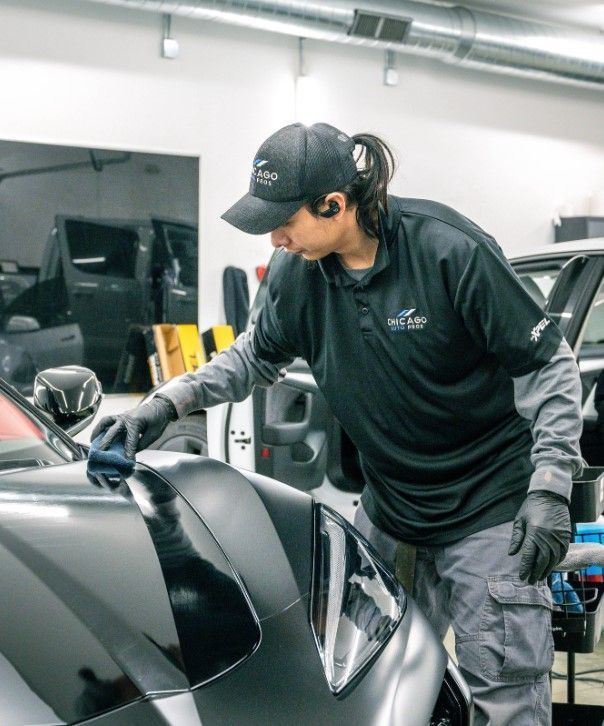
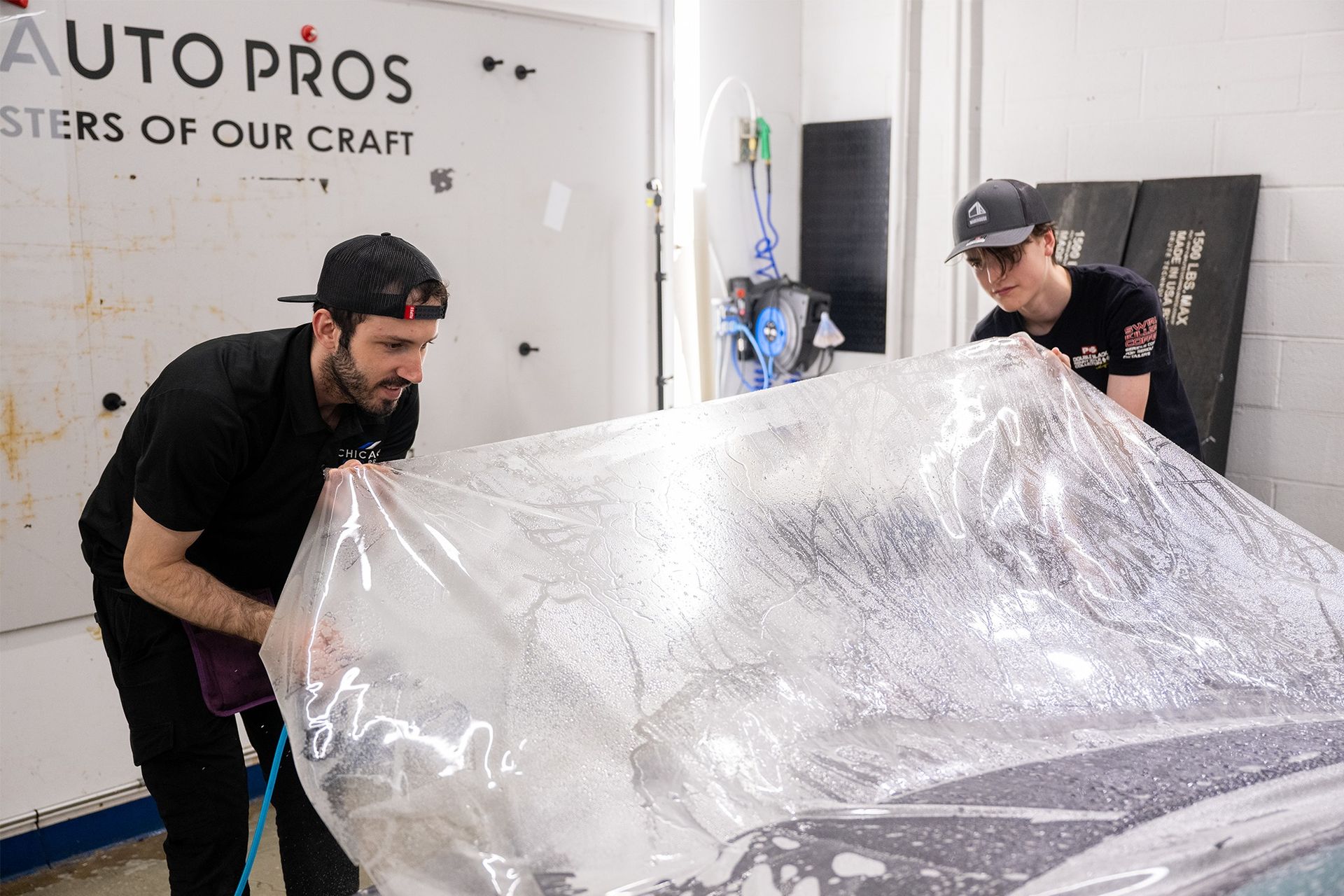
Kit installs are safer, though they may not look as flawless as custom wrapped edges work. A skilled installer like the ones we have at Chicago Auto Pros can offer a blend of both, where we extend the edges of the kit to minimize cutting on the cars, but also wrap the edges of the film to areas where you don’t see it, like the underside of the hood.
The same holds true for badges. Nothing is worse than seeing the edges of the film around a badge in the middle of the hood. At Chicago Auto Pros, we remove badges, lay the film under the badge to hide or eliminate the seams, and then replace the badge. Yes, it takes more time, it’s more expensive, but the results are wonderful! Our goal is to make the film so you can’t even tell if it is on your car. Ask to have a look at one of our fully-wrapped cars to see the amazing results for yourself.
How Long Does Paint Protection Film Last?
Most premium films, like XPEL, come with a 10-year warranty. However, lifespan depends heavily on environmental conditions.
- Garage-kept cars often get 10+ years.
- Daily drivers exposed to sun, weather, and road debris may need reapplication sooner.
Watch for signs like:
- Yellowing
- Cracking
- Peeling
- Discoloration
Once the film begins to degrade, it may be too late to remove it cleanly. Old, brittle film can bond to the paint and leave marks when pulled off the vehicle that require repainting.
How Often Should I Replace It?
Obviously, it depends on how you use the car. Most of our customers replace their film every 3–5 years, especially after significant wear or visible rock chip damage. Self-healing films only repair fine scratches and swirls, not deep rock chips. When the damage is noticeable, it’s time to refresh the film.
Can You Install PPF on an older Porsche?
Technically, yes. But proceed with caution.
If a car has been driven at all, it likely already has minor chips, scratches, or pitting. Even if they’re invisible to the naked eye, once the film goes on, those imperfections become amplified, especially under good lighting.
Some owners of classic air-cooled 911s choose to wrap their low-mileage cars to preserve original factory paint, even if the finish isn’t perfect. That’s a personal choice that I understand, but for best results, PPF should always be applied to a brand-new or freshly corrected surface. Otherwise, the PPF will amplify some of the existing damage.
Final Thoughts
Paint protection film is an investment, but it’s one that pays off over time by preserving your paint, reducing cosmetic damage, and helping maintain resale value.
Whether you cover just the front or opt for a full-body wrap, make sure your installer:
- Uses high-quality film
- Works in a clean, controlled environment
- Has experience with your specific vehicle
- Offers kit or custom options based on your needs
Protect these special cars the right way — cover all of the high-impact areas, including the rocker panels and the a-pillars from day one with a high-quality paint protection film.
Share with your friends

We Make Your Car Look Beautiful
Founded with an unquenchable desire for automotive perfection, Chicago Auto Pros is a leader in paint protection efforts and aesthetic vehicle detailing services in Chicago, Illinois. When you bring your automobile to our Chicago-based detailing shop, you are sure to experience unmatched integrity, customer service excellence, and above all, absolute automotive perfection from the inside out. Choose the right auto detailing team - choose Chicago Auto Pros!
Lombard Location
207a Eisenhower Lane South, Lombard, Illinois 60148, United States
Glenview Location
2075 Johns Ct, Glenview, IL, 60025, United States
St. Charles Location
315 Industrial Dr, St Charles, IL 60174, United States